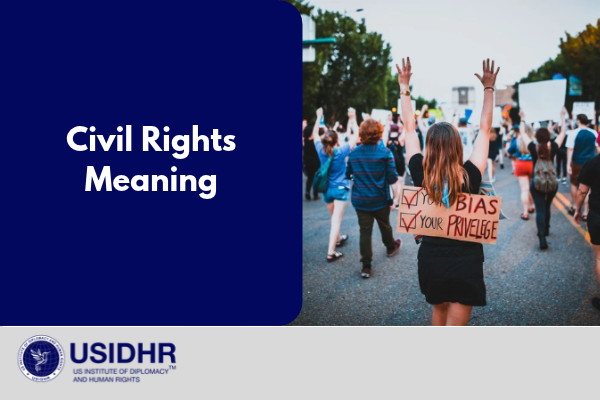
Civil Rights Meaning: Definition, Examples and History
Civil rights are the legal rights that guarantee every person equal treatment under the law and protection from discrimination. In the United States they cover things like the right to vote, the right to equal protection of the laws, and the right not to be refused a job, a home, an education or service in a business because of race, color, religion, sex, national origin, disability or age.
Because civil rights are written into law, they are enforceable. If someone violates them, the person harmed can file a complaint with a government agency or go to court. This guide explains what civil rights mean, gives clear examples, shows where they come from, and explains how they differ from civil liberties and human rights.
Civil rights meaning in simple terms
Civil rights are your right to be treated the same as everyone else by the government, employers, landlords, schools and businesses. They exist to stop unfair treatment based on who you are rather than what you do. The National Park Service describes them as the rights guaranteed to individuals as citizens of a nation, regardless of sex, race, ethnicity, religion or physical or mental ability.
Examples of civil rights
The right to vote, without barriers based on race or sex.
Equal protection of the laws, meaning the government must apply the law the same way to everyone.
Freedom from discrimination at work, in hiring, pay, promotion and firing.
Fair housing, meaning the right to rent or buy a home without discrimination.
Equal access to public education.
Equal access to public accommodations such as restaurants, hotels, stores and public transport.
Due process and a fair trial when accused of a crime.
Equal access for people with disabilities to jobs, buildings and public services.
Where civil rights come from in U.S. law
Civil rights grew out of the long struggle to end slavery and segregation. The main legal foundations are a series of constitutional amendments and federal laws.
13th Amendment (1865): abolished slavery.
14th Amendment (1868): guaranteed citizenship to everyone born in the U.S. and equal protection of the laws.
15th Amendment (1870): banned denying the vote because of race.
19th Amendment (1920): banned denying the vote because of sex.
Civil Rights Act of 1964: outlawed discrimination based on race, color, religion, sex or national origin in employment and public accommodations, and in programs that receive federal money.
Voting Rights Act of 1965: struck down literacy tests and other tactics used to keep Black citizens from voting.
Fair Housing Act of 1968: banned discrimination in the sale and rental of housing.
Americans with Disabilities Act of 1990: extended civil rights protections to people with disabilities.
Many of these laws were won by the civil rights movement of the 1950s and 1960s. To learn how its best-known leader helped secure them, read What Did Martin Luther King Jr. Do? 10 Achievements That Changed America.
Civil rights vs civil liberties
The two terms are often confused. Civil liberties are freedoms that the government cannot take away, such as freedom of speech, freedom of religion and freedom of the press. Most are listed in the Bill of Rights, and they limit what the government can do to you.
Civil rights are about equal treatment. They require that people are not treated differently because of a protected characteristic. Another key difference is who can violate them. Civil liberties mainly protect you from the government, while civil rights can be violated by the government or by private actors such as an employer, a landlord or a business.
Example: a law banning a peaceful protest raises a civil liberties question. A company that refuses to hire someone because of their religion is violating their civil rights.
Civil rights vs human rights
Human rights belong to every person simply because they are human, wherever they live. They are set out in international documents such as the Universal Declaration of Human Rights, adopted by the United Nations in 1948. Civil rights are the rights a particular country grants and enforces through its own laws.
The two overlap heavily. Many civil rights, such as equality before the law and the right to a fair trial, are also human rights. The difference is the source: human rights come from our shared humanity, while civil rights come from national law, which is what makes them enforceable in that country's courts.
What to do if your civil rights are violated
Write down what happened, when, and who was involved, and keep any documents or messages. Then contact the agency that handles that type of complaint. In the United States, the Equal Employment Opportunity Commission handles workplace discrimination, the Department of Housing and Urban Development handles housing discrimination, the Department of Education's Office for Civil Rights handles schools, and the Department of Justice's Civil Rights Division handles many other cases. Deadlines for filing can be short, so act quickly and consider speaking with a civil rights attorney.
Frequently asked questions
What is the simplest definition of civil rights?
Civil rights are legal rights that protect people from unequal treatment and discrimination.
What are the 5 most important civil rights?
The right to vote, equal protection of the laws, freedom from discrimination in employment, fair housing, and equal access to education and public places.
Is freedom of speech a civil right?
Freedom of speech is usually classed as a civil liberty, because it protects you from government interference rather than guaranteeing equal treatment.
Who protects civil rights?
Courts, federal agencies such as the EEOC and the Department of Justice, state human rights commissions, and advocacy organizations all play a role.
Defend rights professionally
Understanding civil and human rights is the first step to protecting them. USIDHR's Certified Human Rights Consultant program teaches you how to identify violations, advise organizations and advocate for equal treatment in your community and workplace.
Start the Human Rights Consultant course
Reference list
[1] Cornell Law School, Legal Information Institute, Civil rights. www.law.cornell.edu/wex/civil_rights
[2] National Park Service, What are Civil Rights? home.nps.gov/subjects/civilrights/civil-rights-overview.htm
[3] Nolo Legal Dictionary, Civil rights. www.nolo.com/dictionary/civil-rights-term.html
[4] National Archives, Civil Rights Act (1964). www.archives.gov/milestone-documents/civil-rights-act
