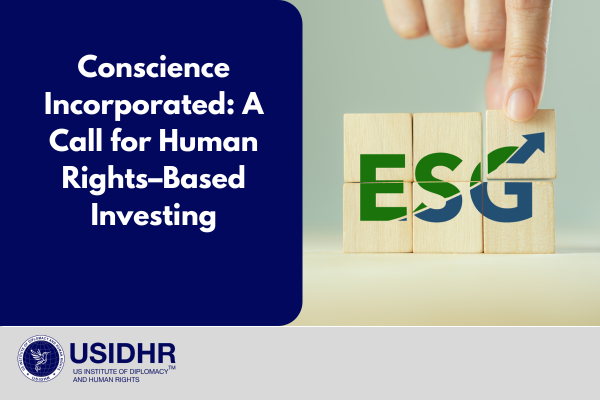
Conscience Incorporated: A Call for Human Rights–Based Investing
Conscience Incorporated calls for a transformation in how businesses approach human rights, urging companies to go beyond surface-level ESG commitments and embrace reforms that align profit with ethical responsibility.
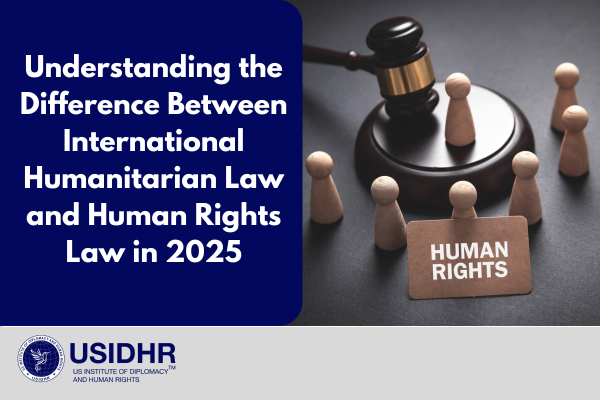
Understanding the Difference Between International Humanitarian Law and Human Rights Law in 2025
This article distinguishes International Humanitarian Law (for armed conflicts) from Human Rights Law (applies always), using the 2025 Russia-Ukraine prisoner exchange to show how both frameworks protect human dignity.
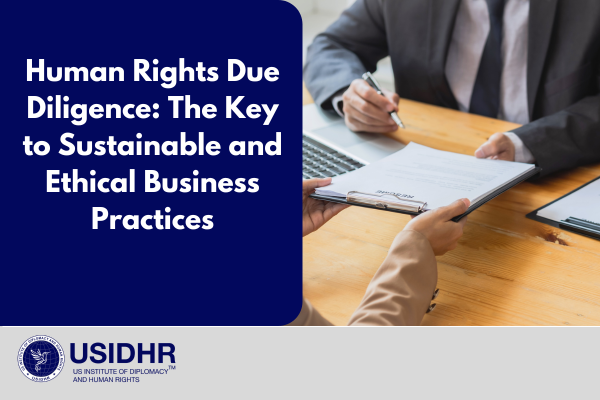
Human Rights Due Diligence: The Key to Sustainable and Ethical Business Practices
This article explains the importance of Human Rights Due Diligence (HRDD) in business, covering compliance, risk management, and ESG benefits with USIDHR’s support.
President Trump’s Executive Order on DEI Programs: What It Means for Human Rights and Equality
President Trump’s executive order on DEI programs sparks debate on human rights and equality. Are universal principles enough without DEI initiatives?
How Covenantal Pluralism Can Transform Global Human Rights Practices
In an increasingly interconnected world, the pursuit of universal human rights is often hindered by cultural, religious, and ideological divides. Covenantal Pluralism offers a transformative framework to bridge these divides.
How to Become a U.S. Diplomat: Guide to the Foreign Service Exam
Embarking on a career as a U.S. diplomat is a noble and challenging path that starts with passing the Foreign Service Exam. This rigorous examination is your
The Role of Protocol in Modern Diplomacy
The Role of Protocol in Modern Diplomacy
Diplomatic protocol plays a crucial role in fostering respectful and effective international relations.
The Significance of Juneteenth: Celebrating Freedom and Honoring History
The Significance of Juneteenth: Celebrating Freedom and Honoring History 5 min read Why is Juneteenth Important? Juneteenth, also known as Emancipation Day, Freedom Day...
The Universal Declaration of Human Rights vs. the US Constitution: What You Need to Know
The Universal Declaration of Human Rights vs. the US Constitution: What You Need to Know 4 min read The Universal Declaration of Human Rights, adopted
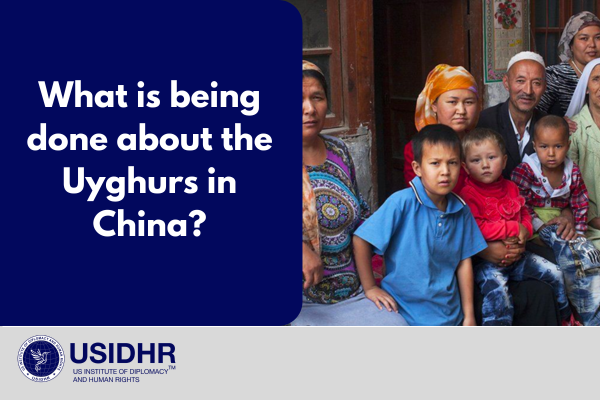
What is being done about the Uyghurs in China?
What is being done about the Uyghurs in China? 7 min read In a modern-day colonial project, the Chinese government is committing genocide and
Addressing Human Trafficking
in Ukraine
Addressing Human Trafficking in Ukraine 7 min read As the conflict between Russia and Ukraine rages on, increased displacement makes millions of individuals vulnerable
What is Digital Citizenship and Why is it Important?
What is Digital Citizenship and Why is it Important? 7 min read The Covid-19 pandemic led to business and school closures which increased technology use
How Did the Global COVID-19 Pandemic Impact Women and Girls?
How Did The COVID-19 Pandemic Impact Women and Girls Globally? 7 min read Despite significant strides in female empowerment, women are often casualties of health
How did Martin Luther King Jr. inspire others?
How did Martin Luther King Jr. inspire others? 7 min read Martin Luther King Jr. is perhaps one of the most prolific figures of our
The Significance of the International Day of Tolerance
The word “tolerance” may seem like it became cliché or overused. What is somewhat unbeknownst of tolerance is the power it truly holds.
Who Do You Belong To? Short Review of Statelessness in the UK
Share on facebook Share on twitter Share on linkedin Under Article 15 of the Universal Declaration of Human Rights, everyone has a right to ...
Tackling Violence Against Women in The Northern Triangle of Central America (NTCA)
The Northern Triangle of Central America (NTCA) is considered the most violent region in the world. Countries such as El Salvador, Honduras, and Guatemala have some of the highest homicide rates globally.
Roma and Sinti Statelessness
in Germany
What is Statelessness? Article 15 of the UN Declaration of Human Rights states that every person has the right to a nationality, that no one shall be arbitrarily deprived of a nationality, nor denied the right...
Addressing Climate Refugees and Displacement Involving Island Nations
Climate change – and climate displacement – are not merely threats of the future, but are already part of life for the inhabitants of drowning or sinking island nations now (though they are projected to become....
Human Trafficking: A Foundational Cheat Sheet
Picture Credits: Kindel Media Human trafficking is one of the hardest crimes to both detect and prosecute. John Vanek, author, and consultant on the collaborative
A Brief History of Human Rights Documents Throughout Time
How did human rights come about? A Brief History Overtime 12 min read It was only 100 years ago that in the
What is the most violated Human Right in America?
Picture: Jenny Chiang (front left), Jessica Wong (center), and Sheila Vo (front right) of Massachusetts’s Asian American Commission at a protest in front of the
What is the importance of human rights to law enforcement?
“In the performance of their duty, law enforcement officials shall respect and protect human dignity and maintain and uphold the human rights of all persons.”
What are the 6 types of slavery?
Image credit: Travis Saylor Slavery. A term you have probably heard of and is often associated with the past, however, this violation of human right
How do we monitor human rights violations worldwide?
Image credit: Blogtrepreneur As enshrined in the Universal Declaration of Human Rights (1948), we are all entitled to human rights which protect our freedoms and
What is meant by Open Diplomacy?
Open diplomacy is not intended to be a substitution for traditional diplomacy. Open diplomacy is nongovernmental, informal, and involves unofficial interactions and
Children’s Education in Pakistan
Image by David Mark from Pixabay The significance of children receiving primary education is extremely underrated. In order for young people to move forwards in
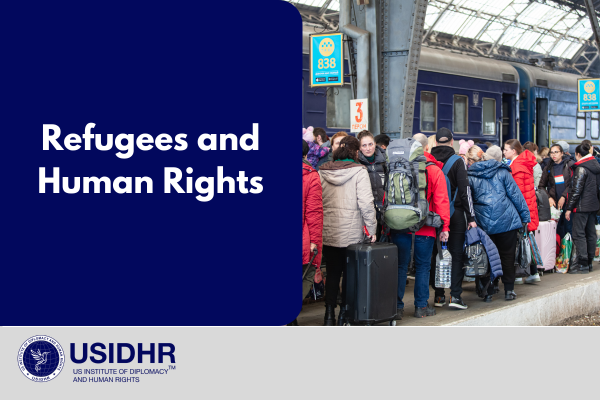
Refugees and Human Rights
Image credit: Marco Verch What do Albert Einstein, Jackie Chan, and the Dalai Lama all have in common? The answer: They were all refugees. Sadly
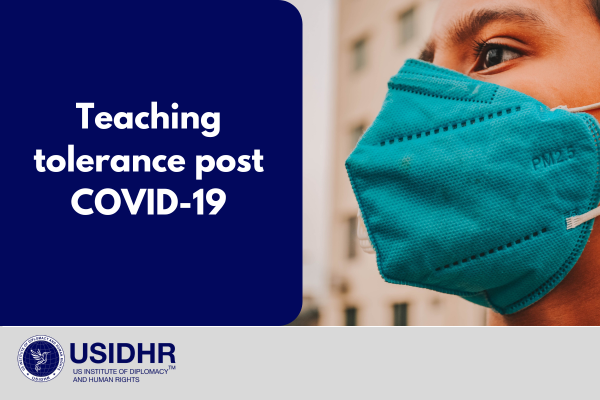
Teaching tolerance post Covid-19
Image credit: 김컴맹딸 The rise of Covid-19 has also resulted in the rise of hate crimes against certain ethnic groups and members of society. False

What is Cloud Diplomacy?
Diplomacy changed considerably during the twentieth century. The word ‘diplomacy’ strictly described any face-to-face contact between the governments of one nation
How to Work in Human Rights
Human rights movements are extremely popular today, and many are somewhat familiar with these two words; whether you’ve heard them at home, with your friends,
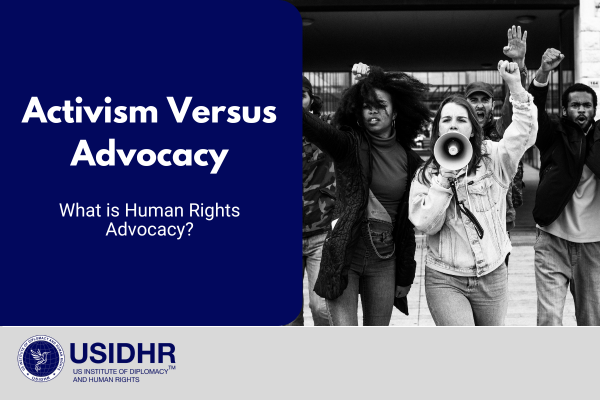
Activism Versus Advocacy: What is Human Rights Advocacy?
From our training sessions and working within our student community, we have found that there is a common misconception regarding the terms activist and advocate.
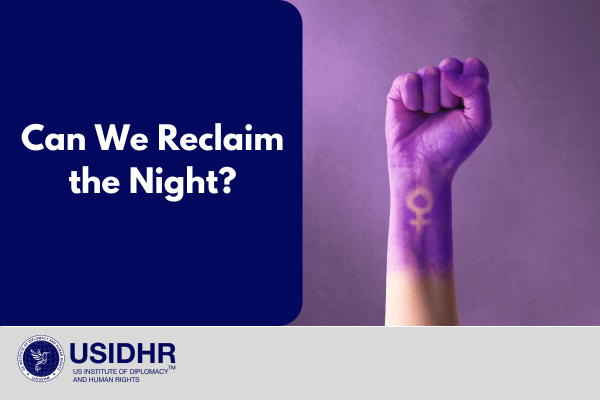
Can We Reclaim the Night?
Violence against women is worryingly normalized, to the extent that women are being conditioned to protect themselves using anything at their disposal from a very
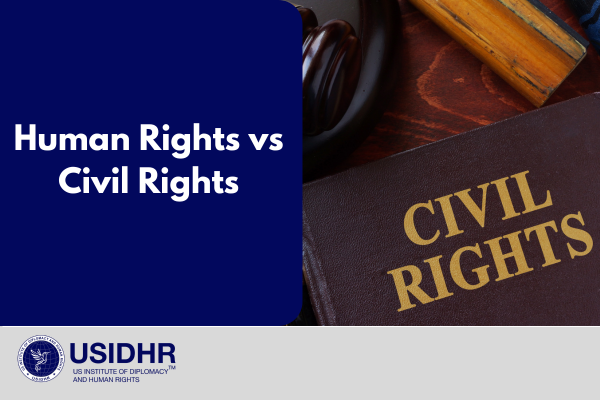
Human Rights vs Civil Rights
Human rights and Civil Rights. Two key terms within the sphere of diplomacy and development which you have probably heard of, but what do they
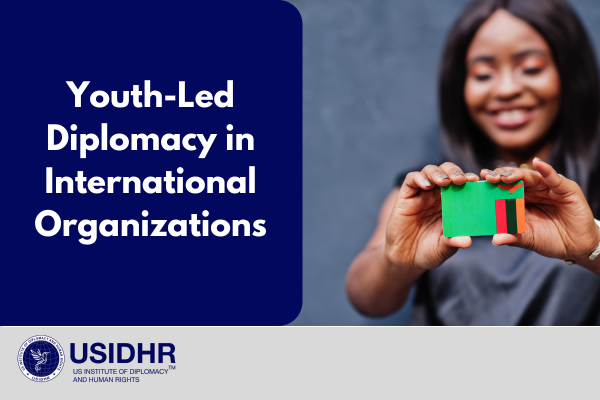
Youth-Led Diplomacy in International Organizations
What is youth-led diplomacy? As a young advocate for women’s rights, I’ve recently invested more time in understanding how I can do my part to
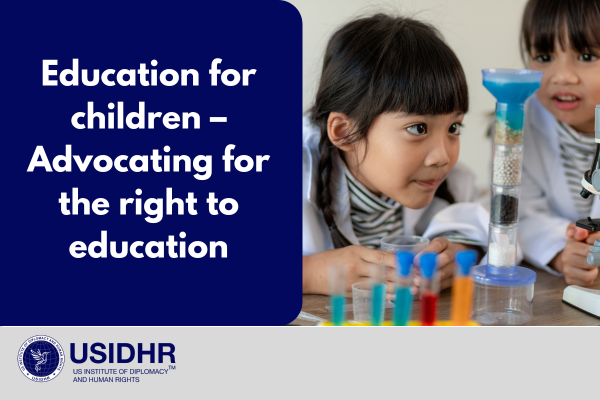
Education for children – Advocating for the right to education
The right to education has been recognized as a human right in a number of international conventions, including the International Covenant on Economic, Social and
Women’s Participation in Diplomacy
Diplomacy is the art of dealing with people in a sensitive and effective way. Despite the purpose that diplomacy carries, advocating equal rights for all, the
How Can Youth Get Involved In Diplomacy?
Firstly, I think it is very important to understand the meaning of diplomacy. Diplomacy: the art and practice of conducting negotiations between nations; skill in handling
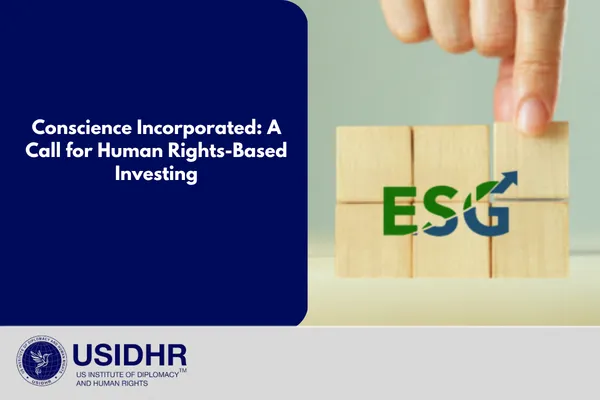
Conscience Incorporated: A Call for Human Rights–Based Investing
Why This Book Matters
My former boss at the State Department, Assistant Secretary of State Michael H. Posner, recently published an important new book on business and human rights: Conscience Incorporated: Pursue Profits While Protecting Human Rights. Preface by Hillary Rodham Clinton. New York: NYU Press, 2024. This book provides a big-picture vision of reforms to the private sector to improve human rights standards and investing.
Years ago, I traveled to Jordan with Assistant Secretary Posner as representative from the U.S. Department of State’s Bureau of Democracy, Human Rights and Labor. Posner led human rights dialogues with foreign officials, civil society advocates, and government leaders. With foreign audiences abroad and in Washington, D.C., I observed how Posner would masterfully handle tense environments, bringing together parties with divergent interests and providing pragmatic ideas for real-world human rights reform.
This book’s strength is that it is grounded in Posner’s experience leading complex human rights dialogues and negotiations toward improved human rights. It is not purely a theoretical academic book, but rather draws on Posner’s decades as a leading human rights diplomat and advocate. From the sweatshops of Bangladesh to the boardrooms of Silicon Valley, Posner exposes the difficult realities behind global supply chains, tech platforms, and Environmental, Social, and Governance (ESG) investing. He offers a roadmap for how companies can pursue profits while protecting human rights.
This book is a timely and thought-provoking contribution to the evolving conversation about the role of business in society. Rather than offering a rigid moral framework, Posner presents pragmatic ideas for how companies can navigate the increasingly complex terrain of human rights, environmental responsibility, and democratic accountability.
My Reflections and Review of Posner’s Conscience Incorporated
In Conscience Incorporated, Michael Posner makes a powerful case for why businesses must take greater responsibility for protecting human rights, especially in regions where governments are unable or unwilling to prioritize human rights in the private sector. The book is organized around three central themes: global labor, technology and democracy, and values-based investing. Posner evidences how outsourcing and weak labor protections contribute to exploitation, and ultimately hurt long-term profits. Similarly, Posner articulates how tech platforms can undermine democratic institutions, an especially timely lesson as we all witness an increase in global democratic backsliding.
Posner focuses on the field of Environmental, Social, and Governance (ESG) investing and how it often lacks real accountability. He calls for a deeper, more honest approach to corporate responsibility that goes beyond surface-level commitments.
ESG as a Catalyst for Change
A particularly important critique from the book is directed at the field of ESG practices and reporting. Posner argues that ESG has largely become a marketing mechanism—used more to polish corporate reputations than to drive real change. He points out that many ESG metrics are vague, inconsistent, and disconnected from actual human rights outcomes. This book highlights glaring issues with the industry, for example how data collection on global labor and human rights performance is all but nonexistent (Posner 2024, 103). He notes that international, agreed-upon labor standards do not yet exist for most industries. For ESG to be meaningful, Posner argues, the sector needs serious reform: clearer standards, independent verification, and a shift in focus from image to impact. The industry needs to move away from ESG as a marketing and reporting focus, and instead provide recommendations for companies to make pragmatic reforms.
I echo Posner’s findings that companies need to strive to meet rigorous standards and ESG reporting requirements, while keeping in mind the big picture; ESG requirements exist to make lasting, positive human rights reforms to business practices. ESG should be more than a reporting framework—it must serve as a catalyst for real, measurable progress in human rights and labor standards. When implemented with integrity, ESG can drive companies to align their operations with the values of dignity and accountability, ultimately leading to more resilient companies.
A Thoughtful Call for Change
As a former diplomat and human rights advocate, I found Conscience Incorporated sobering about the challenges of protecting human rights while companies strive to earn profits. Systemic problems remain pursuing “values over value,” as Posner puts it, and yet at the same time his message is helpful and inspiring. It’s a reminder that businesses are not neutral actors—they shape the world we live in. Indeed, Posner echoes a central tenet of the UN Guiding Principles on Business and Human Rights: the responsibility to uphold human rights lies both with private enterprise and government authorities—neither can fully shirk responsibility onto the other.
Posner offers a helpful example applicable to modern ESG reforms today in the lessons of the organic food industry (Posner 2024, 105). A couple of decades ago, no one would have believed that people would pay more for produce made without pesticides and ethically sourced. Today, it is standard across the food industry. The organic food movement demonstrates that—with education and awareness—consumers are willing to pay more for higher-quality, ethically sourced products. Similarly, investors, especially young investors, are increasingly investing socially consciously. Stakeholders want companies to thrive while not committing human rights abuses.
What makes Posner’s message especially compelling is his pragmatic examples and discussion points. He doesn’t expect companies to solve every global issue, but he insists they do what is reasonably within their power to reduce harm. This practical approach makes his recommendations more accessible and realistic for business leaders who want to make a difference.
Who Should Read This Book
This review is applicable to a wide scope of audience and anyone interested in focusing more on human rights as a consumer. It is especially relevant for:
-Corporate leaders seeking to lead their organizations with integrity.-
ESG professionals and sustainability officers who need pragmatic examples and recommendations to move beyond checklists toward real impact.
-Investors who want their capital to reflect their values.
-Policymakers crafting the next generation of business regulation.
Final Thoughts
ESG is not just a trend—it’s the foundation of how today’s most reputable companies operate. Environmental, Social, and Governance principles are now embedded in everyday business practices to demonstrate responsibility, reduce risk, and meet global expectations. As Posner illustrates, aligning profit motives with human rights and ethical standards leads to stronger brand trust, more resilient supply chains, and sustainable growth.
Under the European Union’s Corporate Sustainability Reporting Directive (CSRD), more than 50,000 companies—including U.S.-based organizations that operate in or export to the EU—will soon be required to publicly disclose ESG data. But even beyond regulatory compliance, robust ESG integration offers competitive advantage: it helps you anticipate stakeholder concerns, attract values-driven investors, and avoid costly legal and reputational pitfalls.
Whether you’re just beginning your ESG journey or looking to deepen your existing efforts, expert guidance can make all the difference. Our USIDHR ESG Leadership Program brings together practical frameworks, hands-on support, and sector-specific expertise to help you:
-Establish clear, measurable ESG goals aligned with human rights due diligence.
-Implement rigorous data‑collection and verification processes.
-Communicate transparently to stakeholders, investors, and regulators.
Ready to transform ESG from obligation into opportunity? Learn more about how our program can support your organization at esg.usidhr.org, and take the first step toward ethical, sustainable business practices.
Reference list
Posner, Michael H. Conscience Incorporated: Pursue Profits While Protecting Human Rights. Preface by Hillary Rodham Clinton. New York: NYU Press, 2024.
Freedom House. Freedom in the World 2025: The Uphill Battle to Safeguard Rights. Washington, D.C.: Freedom House, 2025.

The US Institute of Diplomacy and Human Rights (USIDHR) is an International Continuing Professional Development (CPD) Accredited Organization. Accredited CPD training means the learning activity has reached the required Continuing Professional Development standards and benchmarks. The learning value has been scrutinized to ensure integrity and quality. The CPD Certification Service provides recognized independent CPD accreditation compatible with global CPD requirements
US Institute Of Diplomacy And Human Rights
1250 Connecticut Ave NW Ste 700-5274, Washington, DC 20036



© 2026 US Institute of Diplomacy and Human Rights is a 501(c)(3) organization. Gifts are deductible to the full extent allowable under IRS regulations.